
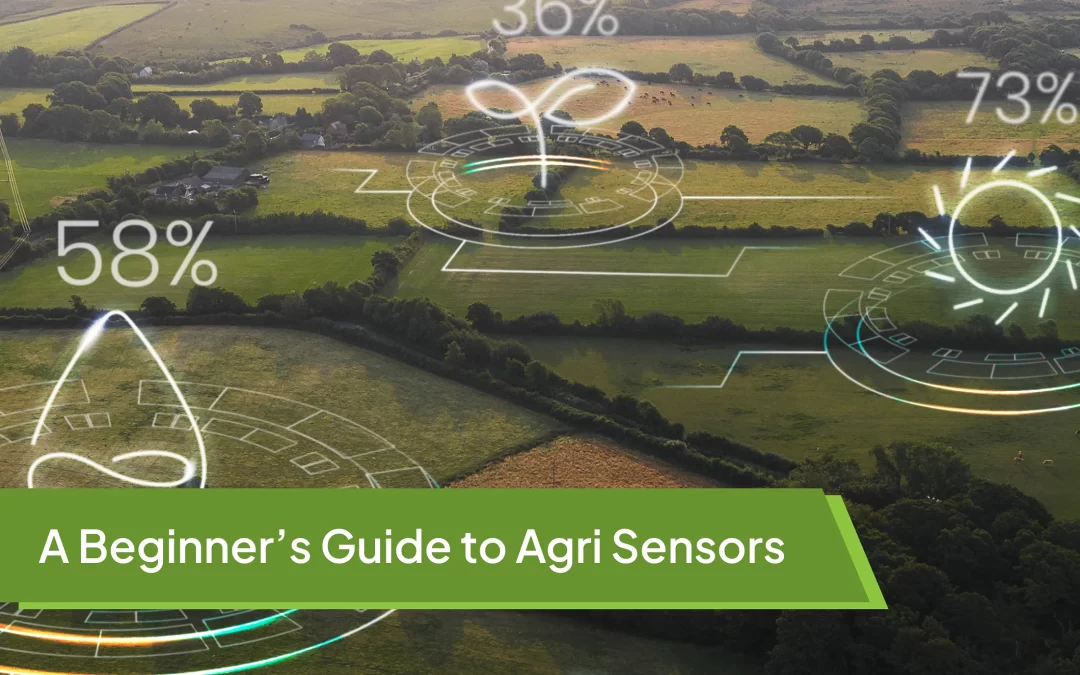
In a world where food demand is rising and climate unpredictability is the new normal, farmers can no longer rely solely on experience and observation. Enter agricultural sensors—the silent, tireless devices turning traditional farms into smart fields. These tools provide real-time insights that help farmers make data-driven decisions, reduce waste, and boost productivity.
But what exactly are agri sensors? And how do they reshape the way we grow food?
What are agricultural sensors?
Agricultural sensors are devices that collect and transmit data from the field. Placed in soil, attached to equipment, or mounted on drones, these sensors measure variables like:
-
Soil moisture and temperature
-
Air humidity and light levels
-
Crop health and nutrient levels
-
Pest and disease presence
The data they generate enables precision farming—applying the right input at the right time and place, instead of relying on guesswork.
Types of agri sensors and what they do
Soil sensors help optimize irrigation by tracking moisture, temperature, and nutrients.
Weather sensors track rainfall, humidity, sunlight, and wind to guide field operations.
Crop health sensors (often on drones or satellites) detect early signs of disease or stress.
Livestock sensors monitor animal health through wearable tech.
Storage sensors ensure quality after harvest by tracking temperature and humidity in silos or containers.
Why agri sensors matter
Precision input usage — Reduce waste by applying only what’s needed.
Early problem detection — Spot issues before they affect yields.
Yield optimization — Make better decisions throughout the crop cycle.
Resource conservation — Save water, energy, and soil.
Data-driven farming — Turn raw data into smart actions with platforms like Scalion.
Sensors beyond the farm
Sensor data doesn’t just help during production. Integrated with platforms like Scalion, it supports:
-
End-to-end supply chain traceability
-
Authenticity verification
-
Cold chain monitoring
-
Export compliance
-
Consumer trust and transparency
Getting started with agri sensors
Start simple. Use soil moisture sensors, basic weather stations, or drone-based crop monitoring. Tools like Scalion can help visualize and act on this data. Government schemes and agri-tech startups often provide support to ease adoption for small and mid-sized farmers.
 Explore Scalion’s Solution Offerings