
It’s time to digitize livestock management.
What is Livestock Management?
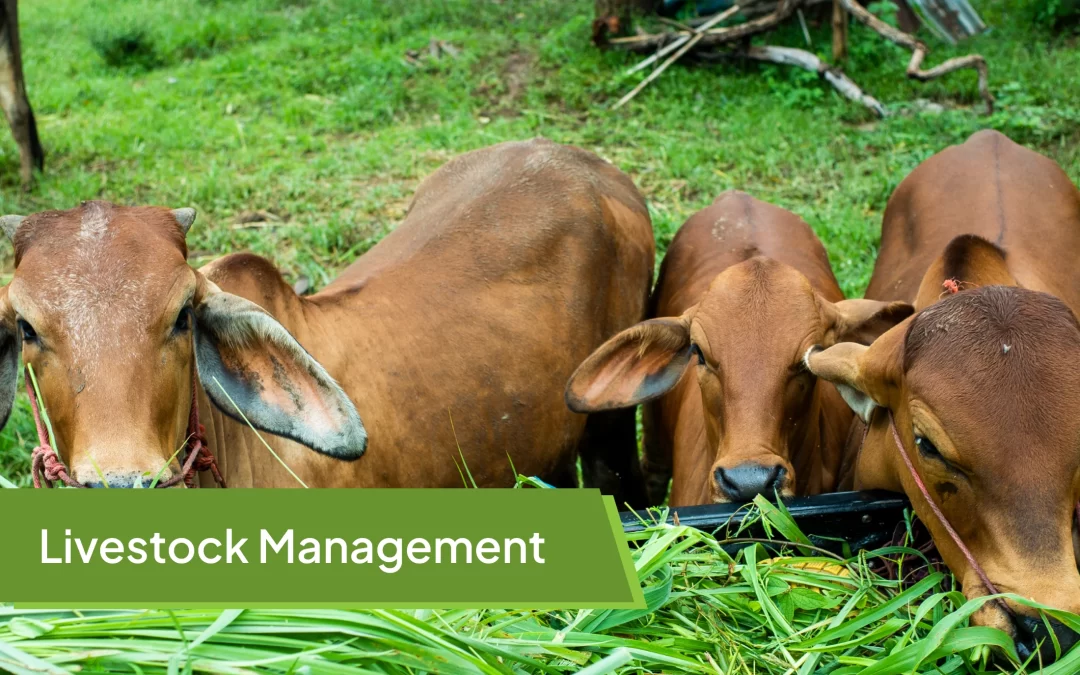
Livestock management is the practice of monitoring and maintaining the health, breeding, feeding, movement, and productivity of animals raised for commercial use. Traditionally, it includes animal ID and tagging, breeding and reproduction tracking, feed scheduling and nutrition, vaccination and disease management, milk yield or meat weight tracking, and shelter and environment control. But traditional methods fall short in today’s complex agricultural ecosystem.
Challenges in Traditional Livestock Farming
No central record—most farmers maintain handwritten records, which are easy to lose and hard to analyze. Disease outbreaks go unnoticed without early alerts or health tracking. Productivity remains low without data on feed, climate, and health. There’s poor market traceability—consumers and buyers want to know where their milk or meat comes from, but that transparency is missing. And compliance with bodies like FSSAI or APEDA becomes difficult without digital records.
Why Digital Livestock Management is the Future
Digital tools are changing how we raise animals. With a platform like Scalion, livestock can be monitored just like crops—through data, automation, and traceability.
Animal-level traceability helps track every cow, goat, or chicken from birth to delivery, including feed, health, and movement history. Real-time health monitoring enables logging of vaccinations, symptoms, and alerts before a disease spreads. Feed optimization means monitoring what’s fed to which group and analyzing impact on output. Productivity tracking enables better breeding decisions through daily data like milk yield, weight gain, or egg production. And compliance becomes easy with auto-generated reports aligned with regulations.
How Scalion Supports Livestock Management
Scalion’s livestock module enables digital animal ID and herd grouping, mobile-based vaccination and medication logs, feed inventory and allocation, farmer/farm-level dashboards, geo-tagged shelter and grazing records, batch traceability for dairy/meat exports, and ESG or organic certification support. Everything works on a mobile-friendly interface that supports rural deployment and multilingual inputs.
Real-world Applications
Dairy cooperatives can monitor milk yield and detect disease outbreaks across member farms. Meat export units can ensure full animal history for traceability and EIC compliance.
Final Thoughts
Livestock farming isn’t just about raising animals anymore. It’s about raising data-backed, traceable, and safe livestock products. Whether you’re a cooperative, FPO, agribusiness, or exporter, the message is clear: data is livestock’s new asset.
At Scalion, we help you digitize the unseen parts of your farm—one animal at a time.
 Explore Scalion’s Solution Offerings