
Technology has transformed how industries operate, and one of the most impactful innovations is RFID (Radio Frequency Identification). While commonly used in retail and logistics, RFID is also playing a crucial role in agriculture—helping farmers and supply chain managers improve efficiency, traceability, and productivity.
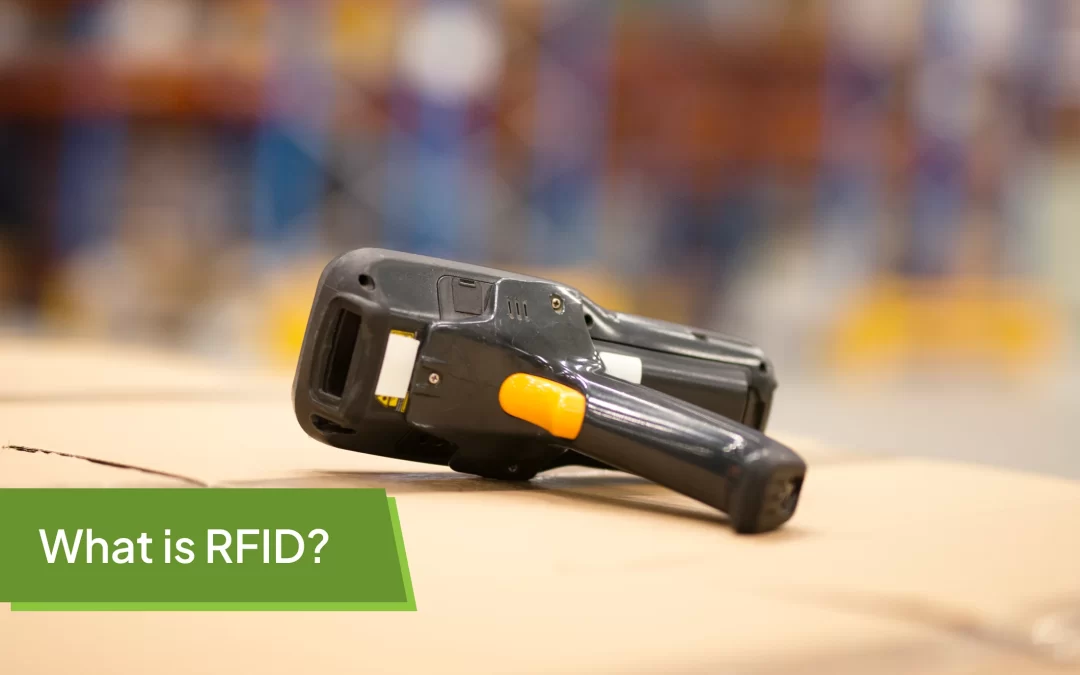
What is RFID?
RFID stands for Radio Frequency Identification. It is a wireless technology that uses electromagnetic fields to identify and track objects automatically. Unlike barcodes, which require a direct line of sight for scanning, RFID tags can be read from a distance and in bulk, making the process faster and more efficient.
Key Components of an RFID System
-
RFID Tag – A small device attached to an object, which contains a microchip and an antenna.
-
RFID Reader – A device that sends radio signals to communicate with tags and read their data.
-
Database/Software – Stores and processes the collected data for tracking and analysis.
RFID tags can be either:
- Passive – No battery, powered by the reader’s signal (cost-effective, widely used).
- Active – Have their own power source, capable of long-range tracking.
How RFID Works
When an RFID reader sends out radio waves, nearby RFID tags respond by transmitting their stored information (like ID, batch number, or condition data). This data is then processed by software, allowing businesses to track items in real-time without manual effort.
Benefits of RFID
- Automation: Eliminates the need for manual scanning.
- Speed: Multiple items can be read simultaneously.
- Accuracy: Reduces human error in record-keeping.
- Traceability: Provides end-to-end visibility in supply chains.
- Durability: Works in harsh environments where barcodes may fail.
RFID in Agriculture: Use Cases
RFID has emerged as a powerful tool in modern agriculture, addressing key challenges in farming and food supply chains.
1. Livestock Management
RFID ear tags or collars are used to identify and monitor cattle, sheep, and poultry. Farmers can track animal health, vaccination history, breeding cycles, and movement. This improves herd management and reduces the risk of disease outbreaks.
2. Crop and Equipment Tracking
RFID tags attached to tools, machinery, and storage bins help farmers keep track of their equipment and agricultural inputs. This reduces theft, prevents losses, and improves operational efficiency.
3. Supply Chain Traceability
RFID ensures transparency in the farm-to-market journey. For example, fruits or vegetables tagged at the farm can be tracked through packaging, storage, transportation, and retail. Consumers and retailers gain confidence in the product’s authenticity and freshness.
4. Cold Chain Monitoring
In perishable goods like dairy, meat, and horticultural produce, RFID combined with sensors helps monitor temperature and humidity levels during transit. This minimizes spoilage and ensures food safety.
Challenges of RFID in Agriculture
- Cost of Implementation: Although costs are reducing, RFID systems can be expensive for small farmers.
- Infrastructure Needs: Reliable internet and power supply are necessary for large-scale use.
- Data Security: Protecting sensitive data from misuse is critical.
The Future of RFID in Agriculture
As costs decrease and IoT (Internet of Things) integration expands, RFID adoption in agriculture is set to grow rapidly. With blockchain integration, RFID will provide tamper-proof supply chain traceability, ensuring consumers know exactly where their food comes from. Governments and agribusinesses are increasingly adopting RFID to promote transparency, sustainability, and food safety.
Conclusion
RFID is more than just a tracking tool—it is a key enabler of smart agriculture. From livestock monitoring to supply chain transparency, RFID improves efficiency, reduces losses, and builds consumer trust. As technology becomes more accessible, RFID will play a vital role in shaping the future of farming and food systems worldwide.
 Explore Scalion’s Solution Offerings