
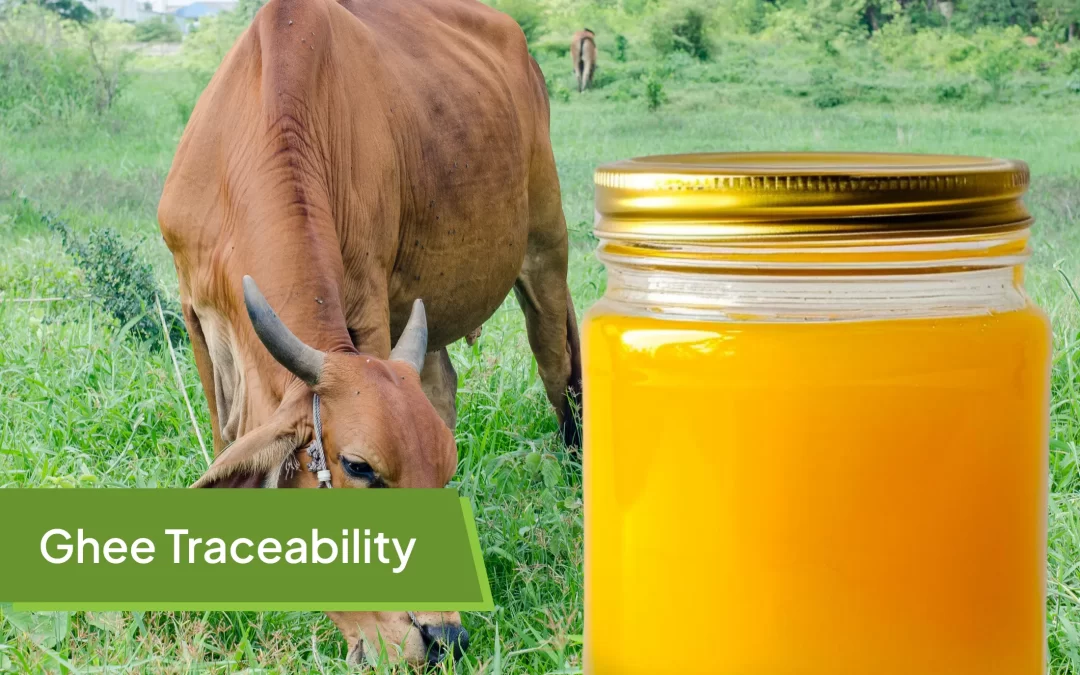
Ghee has gained significant attention for its traditional value, digestibility, and association with cattle breeds. As demand grows, so do concerns around mislabeling, adulteration, and false claims. This makes Ghee traceability essential for building trust, ensuring authenticity, and meeting regulatory expectations.
What Is Ghee Traceability?
Ghee traceability is the ability to digitally track ghee from cow to consumer. It verifies that the ghee is produced exclusively from milk, sourced from certified indigenous cow breeds, and processed using approved methods. Each batch is linked to verified data covering sourcing, processing, testing, and packaging.
Traceability ensures that ghee claims are backed by data, not just labels.
Why Ghee Traceability Matters
1. Preventing Mislabeling and Adulteration
Without traceability, ghee products may contain mixed fats, low-quality milk sources, or adulterants. Traceability enables clear visibility across the supply chain and helps maintain product purity.
2. Ensuring Source Authenticity
Consumers increasingly seek transparency around milk origin, cattle breeds, farming practices, and production methods. Traceability helps validate these claims with verifiable records.
3. Regulatory and Market Compliance
Food safety authorities require documented proof of sourcing, processing, and quality. Traceability simplifies audits, improves recall readiness, and reduces compliance risks.
4. Building Consumer Confidence
Consumers are becoming more conscious about purity, quality, and origin. Traceable ghee provides transparency around sourcing, processing methods, and testing standards.
Key Stages in Ghee Traceability
1. Milk Source & Farm Identification
Milk sources and farms are registered with details such as breed information, location, and farming practices to establish authentic sourcing records.
2. Milk Collection & Segregation
Milk is collected, tested, and stored using batch-level tracking to maintain quality and prevent contamination or mixing issues.
3. Ghee Processing Records
Processing methods—such as traditional bilona preparation or controlled industrial processes—are documented and linked to each production batch.
4. Quality & Purity Testing
Laboratory test results, including fat composition and adulteration checks, are mapped to specific ghee batches for verification and compliance purposes.
5. Packaging & Distribution
Each final product pack is assigned a unique batch ID or QR code, enabling traceability across warehouses, distributors, retailers, and consumers.
Benefits Across the Ecosystem
– Ghee Traceability helps farmers and producers gain recognition for authentic production practices and access premium markets.
– Ghee Traceability enables brands and manufacturers to protect their reputation and reduce fraud and adulteration risks.
– Ghee Traceability provides regulators with better supply-chain visibility and simplifies audit and compliance processes.
– Ghee Traceability gives consumers verified assurance of purity, origin, authenticity, and quality.
The Future of Ghee Supply Chains
As demand for authentic, functional foods increases, traceability will become a standard—not a differentiator. Digital traceability systems will enable Ghee brands to move beyond marketing claims to data-backed trust, supporting long-term sustainability and credibility.
 Explore Scalion’s Solution Offerings